
What Is the Best Stadium POS System in 2026?
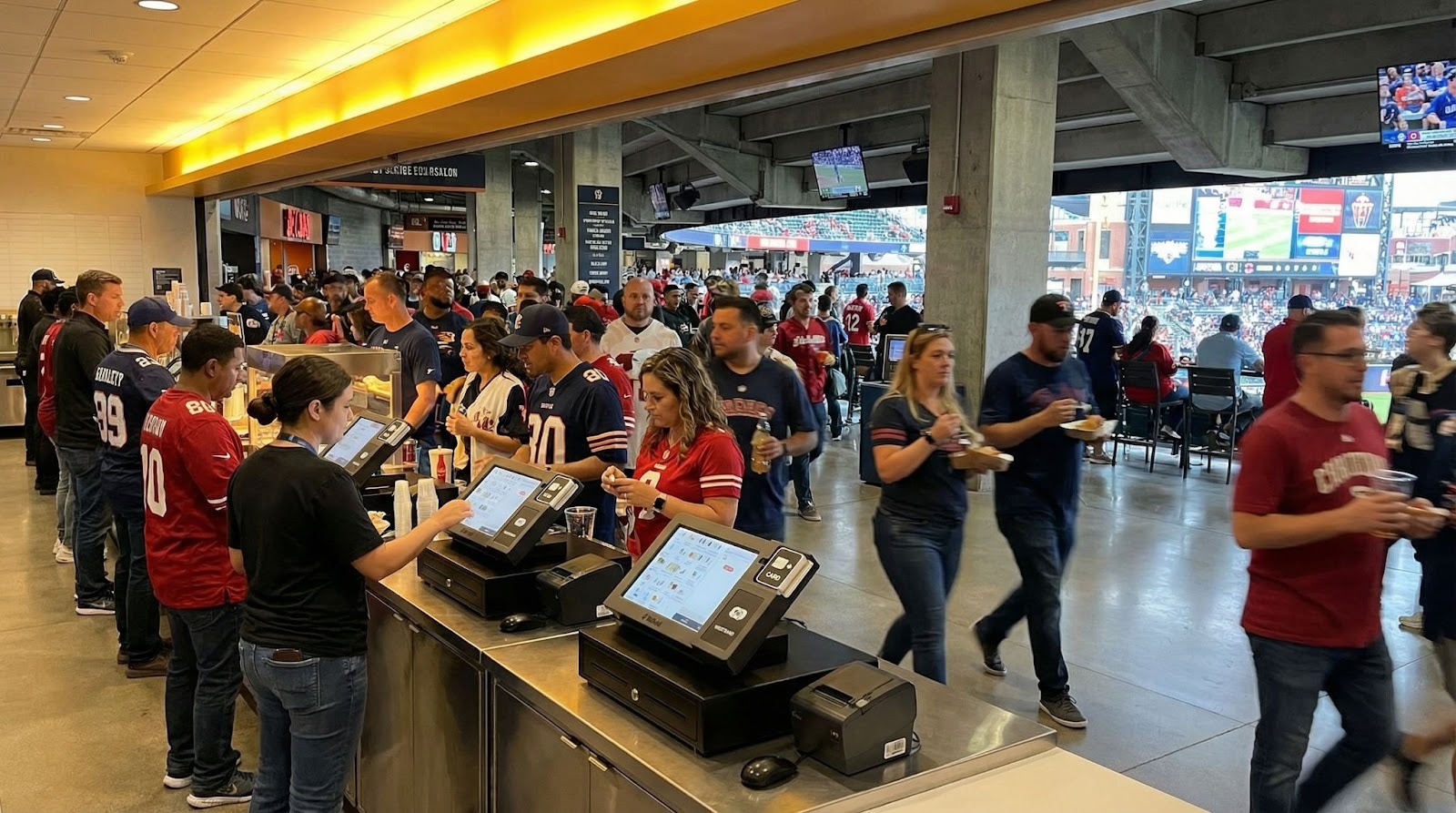
The best stadium POS system in 2026 combines speed, durability, and data intelligence to handle thousands of concurrent transactions during peak demand.
- Specialized stadium POS hardware must survive extreme conditions while processing payments in under three seconds during halftime rushes and intermissions.
- Venues that switch to cashless operations report per-capita spending increases of 16% or more, with six-figure annual savings on cash-handling costs alone.
- Real-time analytics, offline processing capability, and RFID integration now separate tier-one stadium POS solutions from repurposed retail systems.
- If your venue still runs on generic POS equipment designed for restaurant counters, you are capping revenue and frustrating fans every single event.
Finding the right point-of-sale system for a stadium or arena is a fundamentally different challenge than outfitting a restaurant or retail store. The smart stadium market is projected to reach $39.55 billion by 2030, growing at a 14.4% CAGR, and much of that investment centers on payment infrastructure that keeps up with fan expectations. Stadiums process more transactions in a four-hour window than most businesses handle in a week, and they do it under conditions that would cripple a standard countertop terminal. For venue operators evaluating their options, identifying the best stadium POS system requires understanding what separates purpose-built solutions from off-the-shelf hardware never designed for live event demands.
What Makes the Best Stadium POS System Different from Standard POS?
A stadium is one of the most demanding environments for payment technology. The combination of concentrated foot traffic, compressed service windows, and unpredictable connectivity creates requirements that standard POS hardware cannot meet.
Why Do Stadiums Need Specialized POS Solutions?
Consider what happens during a 20-minute halftime at an NFL game. Tens of thousands of fans flood concession areas simultaneously, each expecting to grab food or drinks and return before the action resumes. A standard POS system that handles 15 transactions per hour at a cafe will collapse under that pressure. Stadium POS solutions need to process payments in two to three seconds per transaction, maintain stable connections across hundreds of terminals, and keep operating when network infrastructure gets overwhelmed.
The operational scale is staggering. Mercedes-Benz Stadium in Atlanta runs over 670 points of sale across its concourse. These numbers demand enterprise-grade backend systems with distributed processing power, centralized inventory management, and the ability to push real-time menu updates across every terminal simultaneously.
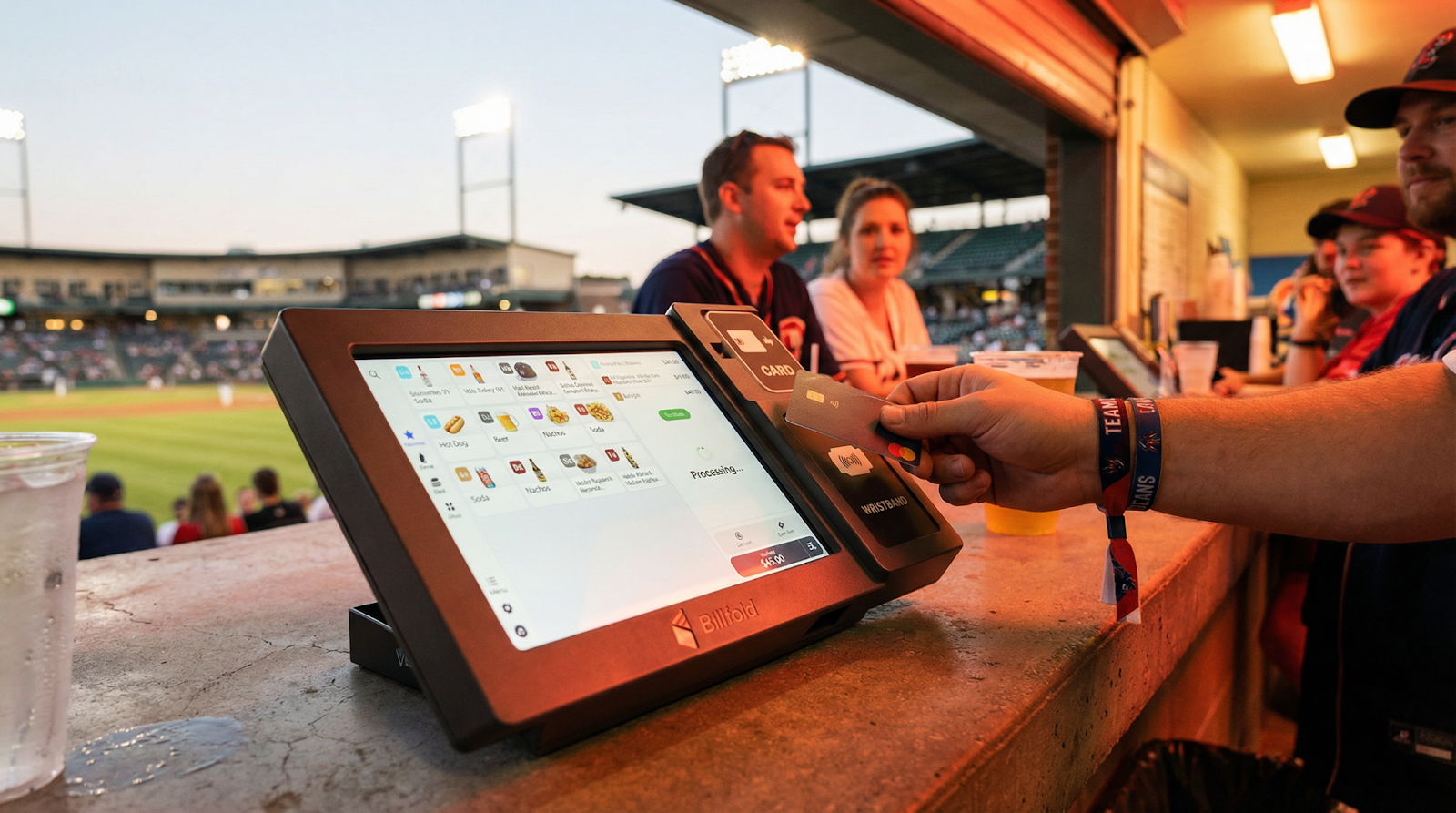
Venues that adopt stadium cashless payments also need systems that handle diverse payment methods, from tap-to-pay cards and mobile wallets to RFID wristbands and prepaid cards loaded at reverse ATM kiosks. The best stadium POS system integrates all of these payment types into a single transaction workflow without adding steps or slowing service.

What Stadium POS Hardware Survives the Real World?
Stadium POS hardware faces conditions that would void most consumer electronics warranties within a single season. Outdoor concession stands deal with direct sunlight that makes screens unreadable, temperature swings from sub-freezing football games to sweltering summer concerts, and the occasional spilled beer. Indoor arenas bring humidity from thousands of bodies in an enclosed space and vibration from bass-heavy concert sound systems.
Durable stadium POS hardware should meet these minimum specifications:
- IP-rated enclosures that protect against water splashes and dust infiltration, especially for outdoor concession areas
- High-brightness displays of at least 700 nits that remain readable in direct sunlight
- Extended battery life on mobile units for roaming vendors working the stands
- Quick-swap battery systems that eliminate downtime during long events
The best arena POS system configurations also account for the physical reality of stadium food service. Countertop space is limited, and staff turnover is high, meaning interfaces need to be intuitive enough that a seasonal worker can learn the system during a 30-minute training session.
What Features Should Every Arena POS System Include in 2026?
The feature landscape for stadium POS has expanded dramatically. Here are the five capabilities that separate serious arena POS system contenders from generic solutions.
1. Offline Processing with Store-and-Forward Network connectivity in stadiums is notoriously unreliable during peak attendance. When 70,000 fans are streaming video and making mobile payments simultaneously, even robust networks can buckle. The best stadium POS system keeps processing transactions during connectivity drops, storing encrypted data locally and syncing with central servers when the connection restores.
2. Sub-Three-Second Transaction Processing Speed is revenue in a stadium environment. Contactless payments reduce processing times by up to 50% compared to cash, and venues with faster transactions consistently see double-digit increases in per-capita spending. If a concession stand serves 60 customers per hour with cash, cutting transaction time in half means serving 120 in that same window.
3. Multi-Channel Ordering Integration Modern stadium POS systems need to accept orders from multiple sources and funnel them into a single kitchen or service workflow. This includes counter orders, self-service kiosk orders, mobile app orders, QR code scan-to-order from seats, and RFID wristband tap-to-pay transactions. Understanding how different payment technologies like RFID, NFC, and EMV fit into this approach is critical for choosing the right system.
4. Real-Time Analytics and Reporting Data from the best stadium POS system feeds directly into operational decisions. Operators need to see which concession stands are overwhelmed, which menu items are selling fastest, and where staffing adjustments would have the biggest impact, all in real time during an event.
5. Centralized Inventory Management A stadium with 30 concession stands selling hot dogs needs to know exactly how much inventory remains at each location and when to trigger restocking. Centralized inventory tracking prevents the frustration of one stand running out while another has excess supply sitting idle.
Feature
Why It Matters
What to Look For
Offline Processing
Network failures during peak attendance
Store-and-forward with automatic sync
Transaction Speed
Revenue tied to throughput
Sub-3-second tap-to-pay processing
Multi-Channel Orders
Fans order from counter, app, kiosk, seats
Unified kitchen display integration
Real-Time Analytics
Mid-event operational adjustments
Live dashboards accessible from mobile
Inventory Management
Prevent stockouts across stands
Cross-location tracking with alerts
How Do Venue Cashless Payments Change Stadium Revenue?
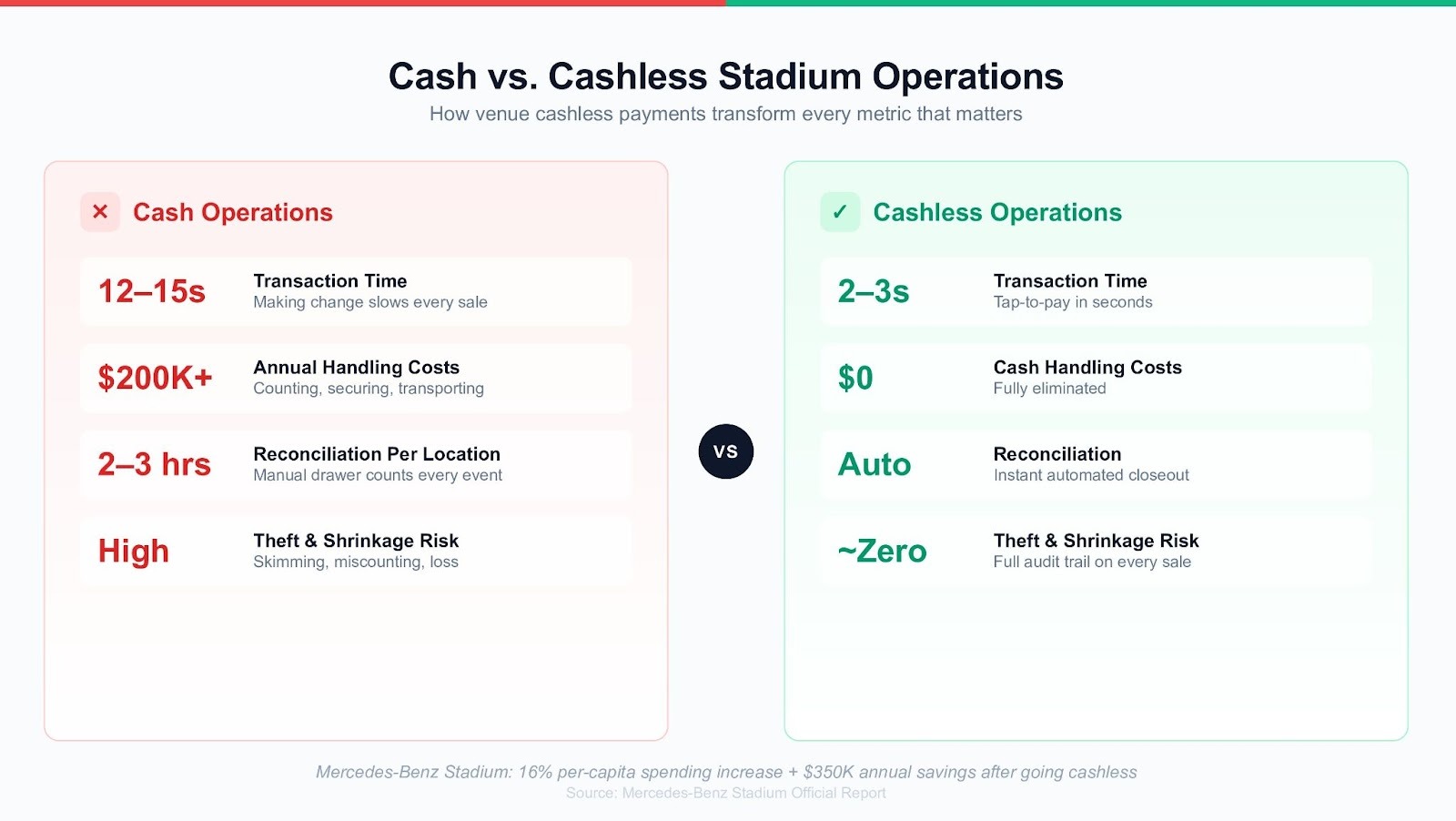
The financial case for venue cashless payments is well documented. According to an official Mercedes-Benz Stadium announcement, the venue reported a 16% increase in food and beverage per-capita spending after going fully cashless in 2019, and saved over $350,000 in its first year by eliminating cash handling, counting, and secure transportation costs.
These results track with broader data. In the United States, 86.9% of point-of-sale transactions are already cashless according to the Worldpay Global Payments Report. Stadium operators who still maintain cash infrastructure are investing in equipment, training, and security for a payment method that fewer than 15% of their fans prefer.
The revenue gains from venue cashless payments come from several sources working together. Transaction speed improvements mean more customers served during fixed demand windows. The psychological friction of spending cash disappears with digital payments, leading to higher average order values. And the data captured from every digital transaction creates opportunities for targeted upselling and dynamic pricing.
Venues implementing strong contactless POS security measures also benefit from reduced fraud and theft. Cash-heavy operations create opportunities for skimming, miscounting, and outright theft that digital payment systems eliminate through automated reconciliation and audit trails.
Metric
Cash Operations
Cashless Operations
Average Transaction Time
12–15 seconds
2–3 seconds
Per-Capita Spending
Baseline
16%+ increase
Cash Handling Costs
$200K–$500K annually
Eliminated
End-of-Day Reconciliation
2–3 hours per location
Automated
Theft/Shrinkage Risk
Significant
Near-zero
How Should You Evaluate the Best Stadium POS System for Your Venue?
Selecting the best stadium POS system requires looking beyond feature checklists and demo presentations. The system that performs beautifully in a controlled showroom may fail spectacularly when 50,000 fans arrive on a 95-degree day.
What Questions Should You Ask Vendors?
Start with deployment references at comparable venues. Ask for specific metrics, including transaction times during peak demand, uptime percentages during major events, and the number of terminals supported per server instance.
Probe deeply into connectivity resilience. How does the system handle the transition from online to offline mode? How quickly do stored transactions sync when connectivity returns? These scenarios happen at every stadium event, and the answers reveal whether a vendor understands stadium operations or is stretching a retail product into unfamiliar territory.
Integration capabilities matter enormously for arena POS system deployments. The POS needs to connect with your existing ticketing platform, access control systems, and loyalty programs. Venues using hybrid payment systems that combine RFID, QR codes, and NFC need to ensure the POS handles all three without degrading performance.
Finally, examine total cost of ownership beyond the initial hardware purchase. Stadium POS hardware takes a beating and needs regular replacement. Processing fees vary significantly between providers and compound at stadium transaction volumes.
What Are the Hidden Costs of Stadium POS Hardware?
The sticker price on stadium POS hardware represents maybe 30–40% of the actual first-year investment. Network infrastructure upgrades are the largest hidden cost for many venues. A stadium with aging WiFi will need significant upgrades to support hundreds of POS terminals processing transactions simultaneously. For older venues, infrastructure costs can exceed the hardware investment itself.
Training costs scale with staff turnover rates, which in stadium concession operations can exceed 100% annually. Every new seasonal hire needs to learn the system well enough to process transactions at full speed within their first shift. The best arena POS system investments prioritize interface simplicity specifically because of this high-turnover reality.
Venues exploring RFID-enabled payment systems need to factor in wristband costs, encoding equipment, and activation kiosk infrastructure. While these systems deliver proven results for large-scale events, the upfront investment requires careful planning to ensure positive ROI within a reasonable timeframe.
Frequently Asked Questions
How much does a stadium POS system cost to implement?
Implementation costs vary widely based on venue size and existing infrastructure. Hardware costs for a mid-size arena typically range from $50,000 to $150,000 for terminals and peripherals, but network infrastructure upgrades, training, and integration work can double or triple that number. Most venues recover their investment within one to two seasons through increased per-capita spending and reduced operational costs.
Can stadium POS systems work without internet connectivity?
Yes. Any serious stadium POS system includes offline processing capability, often called store-and-forward. Terminals continue processing transactions when network connectivity fails, storing encrypted data locally and syncing with central servers when the connection restores. This is a non-negotiable feature for stadium environments where network reliability during peak attendance is never guaranteed.
What is the difference between a stadium POS system and a festival POS system?
Stadium POS systems are typically permanent installations designed for repeated use in a fixed venue with established infrastructure. Festival POS systems are designed for temporary deployment where power, connectivity, and physical infrastructure must be created from scratch. Both require durability, speed, and offline capability, but festival systems prioritize portability while stadium systems emphasize integration with permanent venue infrastructure.
Ready to Find the Right Stadium POS System for Your Venue?
The best stadium POS system for your venue depends on your specific scale, event mix, and operational priorities. What remains universal is that generic retail POS solutions cannot deliver the speed, durability, and data intelligence that modern stadium and arena operations demand. The venues winning on fan experience and revenue optimization are the ones investing in purpose-built payment infrastructure designed for the unique pressures of live events.
For stadium and arena operators ready to explore cashless, RFID-enabled POS solutions built specifically for high-volume venues, Billfold delivers the speed, reliability, and analytics that modern venues require. Reach out to the Billfold team to see how their platform can transform your venue payment operations.
