
Hybrid Cashless Payment Systems: RFID, NFC, and QR for Events

Key Takeaways
A hybrid cashless payment system combines RFID, NFC, QR, and EMV into a single event infrastructure that keeps transactions running no matter what fails.
- RFID wristbands are the only payment method that processes transactions completely offline, making them the essential backbone for festivals and outdoor events.
- NFC, QR, and EMV each have distinct strengths and failure modes. The right mix depends on your event type, audience, and venue environment.
- A single-technology approach is a single point of failure. Any one method will stop working under the wrong conditions. Hybrid architecture closes that gap.
The event organizers building the most resilient payment infrastructure are not betting everything on one technology. They are layering them intentionally.
Your event is running perfectly. Vendors are moving product, lines are short, and your cashless payment infrastructure is humming along without a hitch. Then the WiFi drops. In a single-technology setup, that is the whole operation stalling. In a hybrid system, nothing blinks.
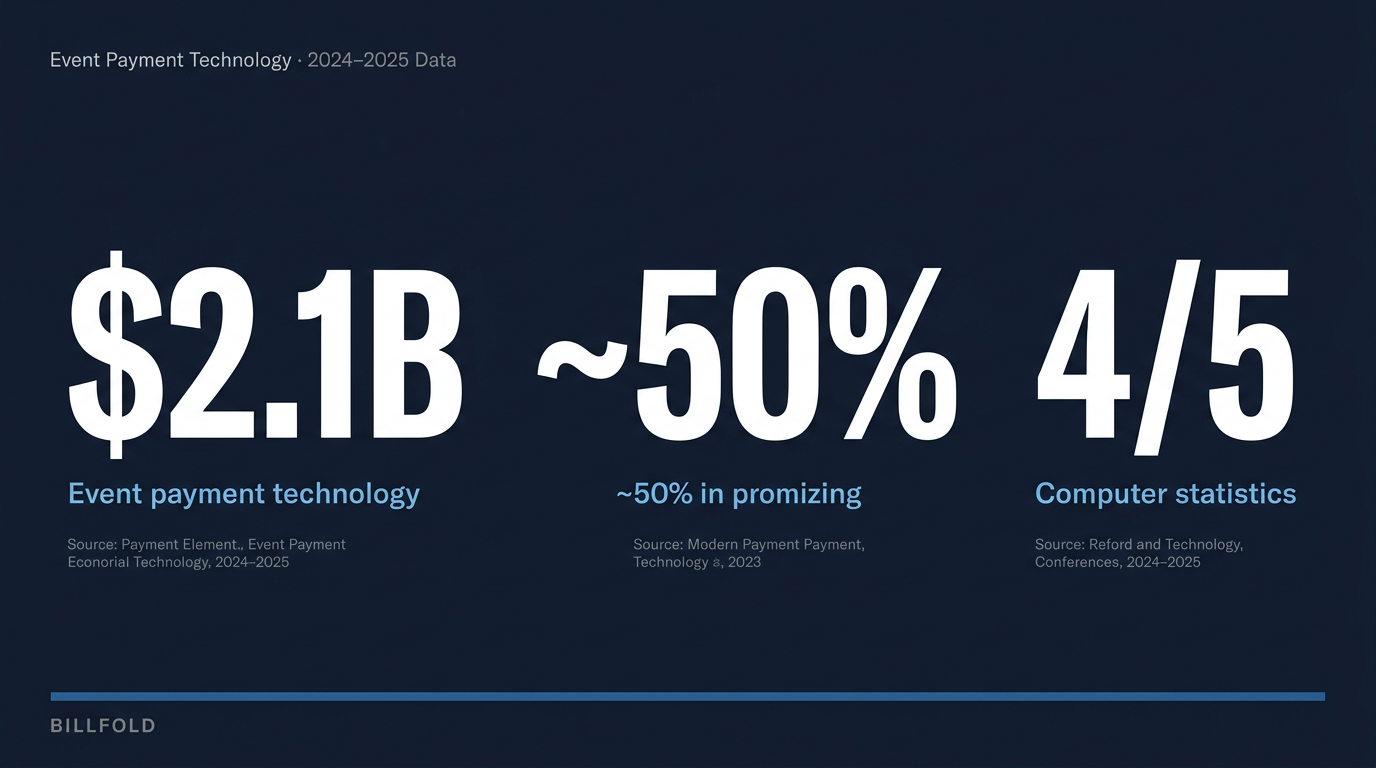
That resilience is the core argument for layering event payment technology rather than picking one method and hoping it holds. According to Growth Market Reports, the global festival cashless payment platforms market reached $2.12 billion in 2024 and is projected to reach $9.89 billion by 2033. That growth is being driven by organizers building systems that work in real-world conditions, not by those doubling down on a single method.
This guide breaks down what each payment technology actually does, when each earns its place in the mix, and how to match the right combination to your specific event type, audience, and venue.
Why Does a Cashless Payment System for Events Need Multiple Technologies?
Events are genuinely hostile environments for technology. Outdoor festivals contend with rain, heat, and dust. Stadiums handle transaction surges in three-minute windows between acts. Multi-day camping events drain attendee smartphone batteries by day two. Any single payment method will eventually hit its limit in these conditions.
The failure modes are different for each technology, which is exactly why combining them works. An NFC-only setup fails the moment a device dies or the network gets overwhelmed by 40,000 people in the same field. QR codes become unusable in direct sunlight or when a printed code gets wet. Even RFID, the most resilient option, needs careful backend design to function offline. Understanding how these technologies compare is the starting point for building infrastructure that holds up when it matters.
According to Payments Dive, about half of U.S. concerts are now cashless, with adoption accelerating across the events industry. A separate Verizon and Morning Consult survey of 2,202 U.S. adults found that four in five concertgoers have used digital wallets to make purchases at live music events. Attendees expect seamless payment options, and events that cannot deliver leave revenue on the table.
What Does Each Payment Technology Actually Bring to the Table?
Modern hybrid event payment technology integrates four distinct methods. Each has a primary use case where it outperforms the others, and conditions where it fails. Understanding both is how event organizers build a system with no single point of failure.
RFID Wristbands: The Offline Backbone
RFID is the foundation of most hybrid systems for events because it is the only technology that operates completely independently of network connectivity. A wristband tap processes in under two seconds with no internet required. Transactions store locally and sync when connectivity returns, so there is no revenue loss during outages. For a detailed look at the security architecture behind this, the RFID event payment guide covers encryption, tokenization, and how offline authorization actually works.
The wristband form factor also eliminates device dependency entirely. Attendees do not need a charged phone, a compatible device, or any prior setup to pay. At a high-volume bar during peak service, this translates directly to faster throughput and shorter queues. The trade-off is upfront cost: RFID requires dedicated wristband stock, specialized readers, and a backend designed for closed-loop operations.
NFC Mobile Payments: The Convenience Layer
Near Field Communication allows attendees to pay with Apple Pay, Google Pay, or Samsung Pay using their phone or smartwatch. For events with reliable connectivity and a tech-comfortable audience, NFC adds meaningful flexibility. The limitation is device dependency. NFC stops working when battery dies or the network gets congested. In a hybrid system, NFC works as a primary option under normal conditions while RFID handles everything else.
QR Code Payments: The Low-Cost Option
QR codes are the lowest-cost entry point in any hybrid payment mix. Vendors display a printed code, attendees scan with a native camera app, and no specialized hardware is required. This makes QR well-suited to lower-volume secondary vendors, merchandise booths, or temporary pop-up stalls. The limitation is clear: QR is the slowest of the four methods and the most vulnerable to environmental conditions. Bright sunlight or water damage breaks the transaction flow. QR earns its place in specific vendor niches, not as a primary method at high-volume food and beverage locations.
EMV Card Acceptance: The Universal Fallback
EMV chip card readers are the payment method every attendee already has and every bank already supports. Including EMV in a hybrid system is primarily about attendee accommodation. Some guests will not have their wristband loaded, will not have a compatible phone, and will not be able to scan a QR code. A card reader catches all of them. The trade-off is speed and data visibility: EMV processing is slower than a wristband tap, and open-loop card transactions route through banking networks rather than your closed-loop event system. For a direct comparison of how all three primary technologies perform across operational dimensions, see the full RFID vs. NFC vs. EMV breakdown.

Here is how the four methods stack up across the dimensions that matter most to event operators:
- RFID Wristband: Best for multi-day festivals, high-volume vendors, and remote venues. Processes transactions in under two seconds, works fully offline, and requires higher upfront investment in wristband stock and readers.
- NFC Mobile Pay: Best for urban venues with strong connectivity and tech-forward audiences. Transactions complete in two to four seconds using phones attendees already own, but stops working when devices lose battery or the network goes down.
- QR Code: Best for low-volume vendors, merch booths, and pop-up stalls. Very low deployment cost with no specialist hardware required, but slower at five to ten seconds per transaction and vulnerable to sunlight and water damage.
- EMV Card: The universal fallback for general admission and guests without a loaded wristband or compatible device. Moderate hardware cost, eight to fifteen seconds per transaction, and routes through banking networks rather than your closed-loop system.
How Do You Choose the Right Technology Mix for Your Event?
The right combination depends on your venue, your audience, your vendor types, and the operational conditions you need to plan around. These six questions serve as a practical decision framework.
- What is your connectivity situation? Remote or outdoor venues with unreliable coverage should treat offline capability as a baseline requirement, not a nice-to-have. Urban venues with strong, managed WiFi have more flexibility to lead with NFC.
- Who is your audience and how long is your event? Younger, tech-forward crowds adapt quickly to wristbands and mobile wallets. Broader demographics need universal options like EMV. Multi-day events introduce battery drain that makes RFID increasingly dominant by day two.
- What is your vendor mix? High-volume food and beverage operators need maximum transaction speed, pointing toward RFID. Lower-volume merchandise vendors may find QR codes adequate. Match the technology to the demand of each vendor type rather than applying one solution across the entire event footprint.
- How much data do you need from transactions? Closed-loop RFID systems give you full visibility into spending patterns, vendor performance, and real-time inventory signals. Open-loop card payments route through banking networks and return far less data to you. If post-event analytics matter to your operation, weight your mix toward closed-loop.
- What type of event are you running? Multi-day festivals need RFID as the backbone. Stadiums with compressed transaction windows benefit from NFC-led approaches with EMV fallback. Corporate conferences and trade shows can often run on NFC and contactless cards alone, with RFID badge integration added for larger or more complex floor plans.
- What is your budget and timeline? RFID requires the most upfront investment. A staged approach works well for events new to hybrid systems: start with a strong RFID core and EMV fallback, then layer in NFC as your infrastructure matures. The cashless implementation guide covers rollout planning in detail.
What Happens to Event Payments When Connectivity Fails?
This is the question that separates organizers who have been through a real outage from those who have not. Network failures at events range from brief WiFi drops to full cellular blackouts caused by tens of thousands of people attempting to use the same towers. How your system responds depends entirely on whether offline operation was designed in from the start.
RFID systems built for events process transactions at the terminal level and store them locally when the network is unavailable. Attendees keep tapping, vendors keep selling, and the log syncs when connectivity returns. This architecture requires upfront planning around spending limits and fraud controls, but it means the payment system continues functioning through an outage. The RFID cashless payment systems buyer's guide walks through the key technical questions to ask before selecting a platform, since not every system described as offline-capable is built the same way.
NFC and QR payments require network connectivity for authorization and stop processing when the network goes down. EMV cards can sometimes process offline depending on card type and terminal configuration, but this is not reliable. In a hybrid system, NFC and QR going down during an outage is manageable because RFID continues carrying the load. In a single-technology NFC or QR setup, the same outage shuts every vendor down at once.
FAQ
What is a hybrid cashless payment system for events?
A hybrid cashless payment system combines multiple technologies, typically RFID, NFC, QR codes, and EMV card readers, into a single integrated infrastructure. The goal is to ensure that if one method becomes unavailable due to connectivity issues, dead batteries, or environmental conditions, another method continues processing without disruption to attendees or vendors.
Do I need RFID wristbands if I already have NFC-enabled terminals?
It depends on your venue. For urban events with reliable connectivity and a tech-savvy audience, NFC-primary setups can work well. For outdoor festivals, multi-day events, or any venue where network reliability is uncertain, RFID provides offline resilience that NFC cannot match. Most experienced event operators use RFID as the backbone and NFC as a secondary layer, not the other way around.
Which payment method is fastest for high-volume event vendors?
RFID wristbands consistently outperform other methods at high transaction volumes. A wristband tap completes in under two seconds, compared to several seconds for NFC mobile payments and meaningfully longer for QR or EMV chip card processing. For food and beverage vendors serving hundreds of customers per hour, that speed difference translates directly into more transactions completed, shorter queues, and higher revenue per service window.
Can an event payment system track spending across different vendors?
Closed-loop systems, where attendees pre-load funds onto a wristband or event account, capture transaction data across every vendor in a single reporting dashboard. This gives organizers real-time visibility into vendor performance, product sales, and inventory. Open-loop EMV card payments route through banking networks and return far less data to the event operator.
What happens if both WiFi and cellular go down at the same time?
In a properly designed hybrid system with RFID at its core, a simultaneous WiFi and cellular failure does not stop transactions. RFID terminals process locally and queue the transaction data until connectivity is restored. NFC and QR payments will pause, but with RFID active, vendors remain operational. This is why offline-capable RFID architecture is the non-negotiable foundation of any serious event payment build.
Build a Payment System That Handles What Events Actually Throw at It
Single-technology setups work fine until they encounter the conditions events routinely produce: congested networks, dead batteries, damaged codes, or a mid-event infrastructure failure. The case for hybrid event payment technology is straightforward: no individual method covers every scenario, and the cost of a payment outage at a live event is immediate and unrecoverable.
The right mix depends on your event. RFID anchors the system with offline resilience and maximum throughput. NFC, QR, and EMV fill specific roles where they outperform alternatives. The result is a cashless payment system that works for every attendee, every vendor, and every condition the event throws at it.
Billfold is purpose-built for exactly this. The platform unifies RFID, NFC, QR, and card acceptance in terminals designed for live events, with offline processing, real-time analytics, and the operational flexibility event organizers actually need. Reach out to the Billfold team to talk through what the right technology mix looks like for your next event.
