
RFID Payment Problems: How to Prevent Every Common Failure

Key Takeaways
RFID payment systems fail when organizers skip critical planning steps, not because the technology is unreliable.
- Connectivity issues account for most cashless payment failures, yet offline-capable systems eliminate this risk entirely
- Staff training gaps create bottlenecks and frustrated attendees even when hardware works perfectly
- Pre-event communication determines whether guests embrace or resist cashless payments
- The right vendor selection prevents problems before they start
Ask your provider the hard questions before signing, not after your first event goes sideways.
Event organizers increasingly recognize that cashless payment technology delivers faster transactions, better data, and increased revenue. The global cashless payments market reached $139.61 billion in 2024 and continues growing at nearly 10% annually. Yet some organizers hesitate because they've heard horror stories about RFID payment problems derailing events. The reality? These failures trace back to preventable causes. Understanding what goes wrong and why gives you the knowledge to ensure your cashless deployment runs smoothly from day one.
What Causes RFID Payment Problems at Events?
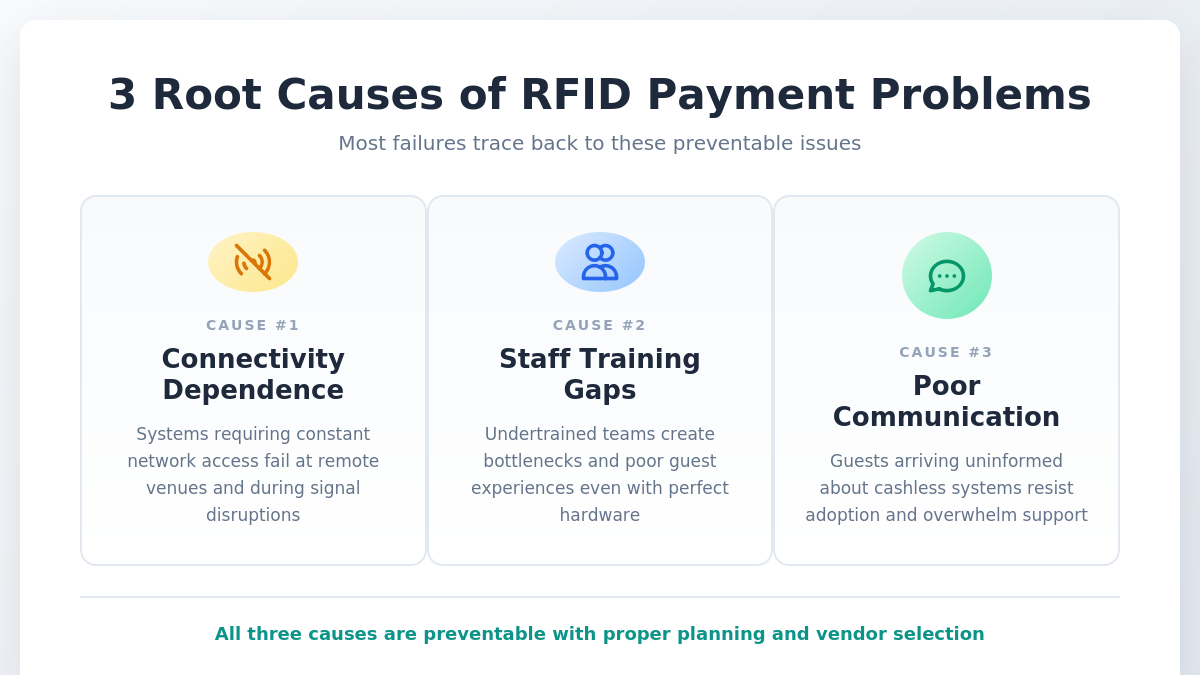
RFID payment problems rarely stem from the technology itself. When systems fail, the root causes almost always involve implementation decisions, vendor limitations, or inadequate preparation. Knowing the common failure points helps you avoid them entirely.
How Do Connectivity Issues Disrupt Cashless Payments?
Network failures represent the most feared scenario for event organizers running cashless systems. Festivals often take place in remote locations, greenfield sites, or massive venues where cellular signals struggle. When traditional payment systems lose connectivity, transactions halt completely, lines grow, and revenue evaporates minute by minute.
The critical distinction lies in system architecture. Standard contactless card payments require constant network connectivity for authorization. Every tap needs to communicate with external servers before approving the transaction. One network hiccup means declined payments and confused guests.
RFID systems designed with resilient cashless event architecture operate differently. They process transactions locally on the device, store data securely, and sync with central servers when connectivity resumes. This offline-first approach means 100% uptime regardless of network conditions.
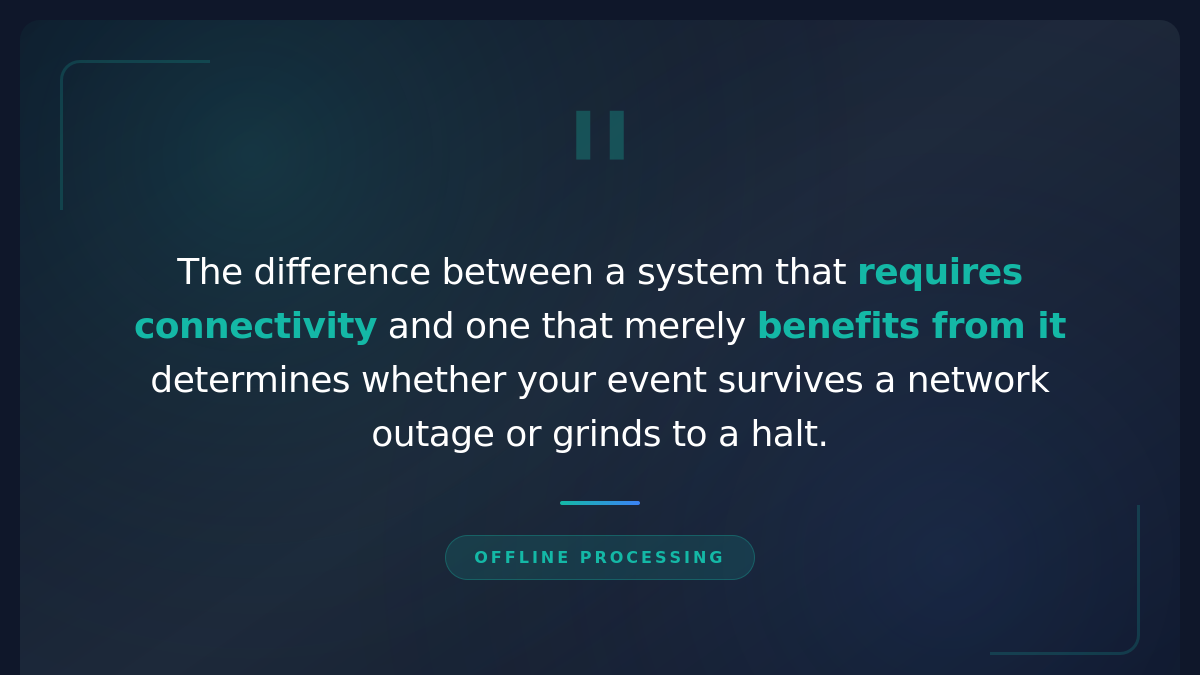
The difference between a system that requires connectivity and one that merely benefits from it determines whether your event survives a network outage or grinds to a halt.

Why Does Inadequate Staff Training Create Problems?
Even perfect hardware fails when staff don't understand how to use it. Training gaps manifest as slow transaction times, incorrect troubleshooting, and inability to help confused guests. These human factors create the perception of system problems even when the technology works flawlessly.
Staff need hands-on experience before gates open. They should understand how to process standard transactions, handle edge cases, troubleshoot common issues, and explain the system to first-time users. Rushed training sessions or skipped practice runs guarantee problems during peak periods when pressure runs highest.
The best vendors provide comprehensive training programs that address both technical operation and customer service aspects. Your team needs confidence with the technology before facing thousands of guests who expect fast, friendly service.
What Role Does Pre-Event Communication Play?
Attendee confusion creates its own category of RFID payment problems. When guests arrive without understanding how cashless payments work, they need extensive hand-holding at registration. They may resist the system entirely, demand cash alternatives, or complain loudly on social media about being forced into unfamiliar payment methods.
Effective pre-event communication transforms potential resistance into anticipation. Guests should understand how to load funds before arriving, where to find top-up stations on-site, how to check their balance, and what happens with unused funds after the event. Clear information delivered through email, social media, and event websites reduces friction dramatically.
Events that communicate early and often see higher pre-event top-ups, faster on-site registration, fewer support requests, and better overall guest satisfaction. The communication investment pays returns throughout the event.
How Do You Prevent RFID Payment Failures?
Prevention starts with recognizing that RFID payment problems originate from planning gaps and vendor limitations rather than inherent technology flaws. Address these factors systematically and failures become extraordinarily rare.
What Questions Should You Ask Your RFID Provider?
Vendor selection determines most outcomes. The right partner prevents problems through robust technology, comprehensive support, and proven experience. The wrong choice leaves you vulnerable to preventable failures.
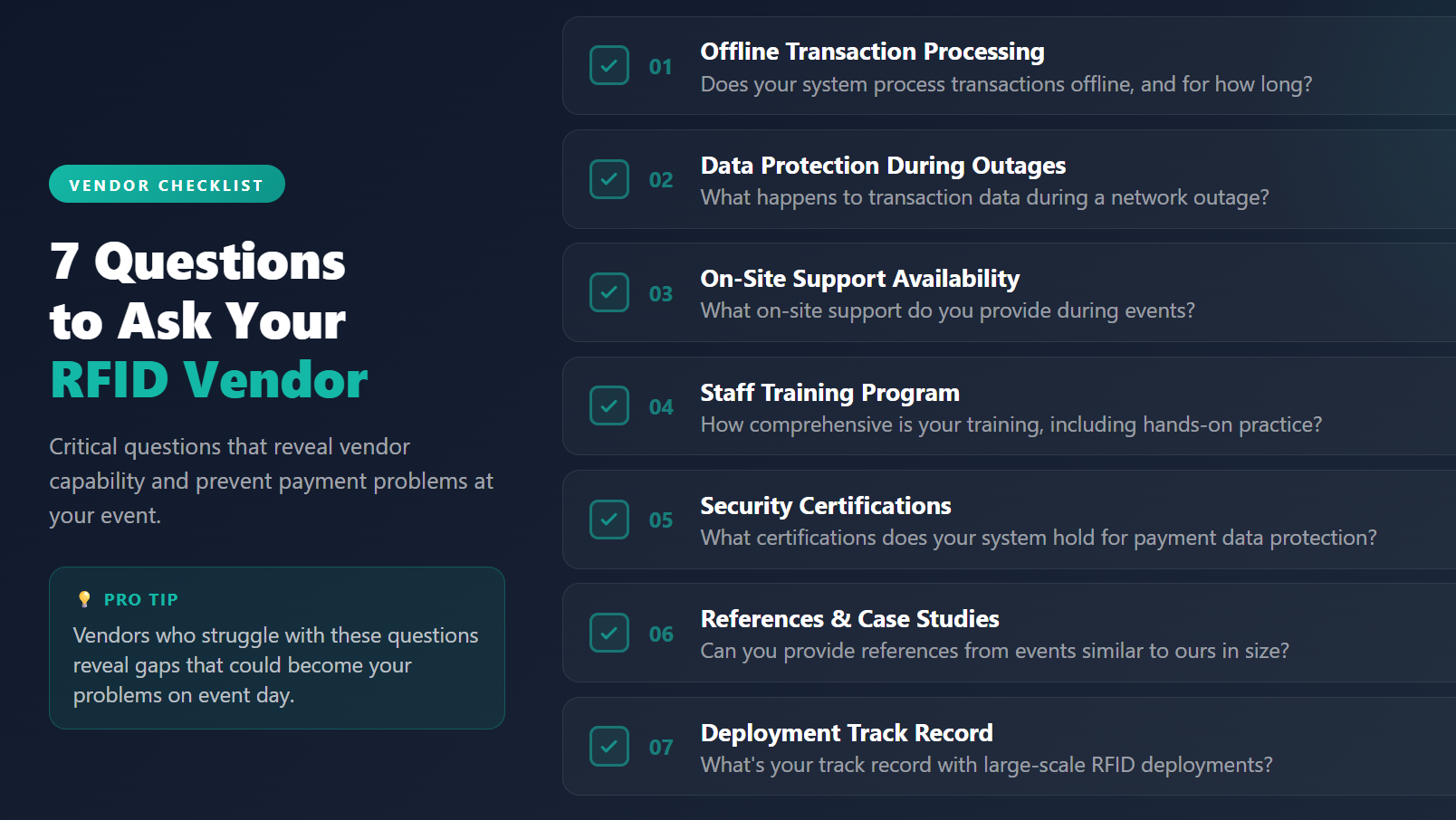
Seven critical questions for every RFID vendor conversation:
- Does your system process transactions offline, and for how long can it operate without connectivity?
- What happens to transaction data during a network outage?
- What on-site support do you provide during events, and what are response times for critical issues?
- How comprehensive is your staff training program, and does it include hands-on practice?
- What security certifications does your system hold, and how do you protect payment data?
- Can you provide references from events similar to ours in size and complexity?
- What's your track record with large-scale RFID deployments?
Vendors who struggle to answer these questions confidently reveal gaps that could become your problems. Those who address each point with specific details and evidence demonstrate the maturity your event requires.
How Important Is Testing Before Go-Live?
Testing reveals problems when stakes are low and fixes are easy. Skipping this step means discovering issues with 50,000 guests waiting in line.
Effective testing simulates real-world conditions including peak transaction volumes, network interruptions, and hardware failures. Run transactions at the speed you expect during busy periods. Deliberately disconnect network connectivity to verify offline operation. Test edge cases like refunds, balance transfers, and lost wristband scenarios.
Soft launches with limited guest groups provide invaluable feedback before full deployment. These controlled rollouts identify usability issues, training gaps, and optimization opportunities. Problems discovered during soft launch get fixed before they affect your broader audience.
The investment in thorough testing pays massive returns. One hour of pre-event testing prevents ten hours of live-event troubleshooting and immeasurable reputation damage.
What Backup Systems Should Be in Place?
Redundancy protects against the unexpected. Even the best systems occasionally encounter issues that backup procedures need to handle.
Network redundancy matters most. Invest in robust local infrastructure rather than relying solely on venue connectivity or cellular signals. Many large events deploy their own temporary networks with backup internet sources. Some organizers maintain satellite connectivity as a failsafe for truly mission-critical operations.
Hardware redundancy means having spare devices readily available. Terminals fail occasionally through no fault of the system. Having replacements on-hand means swapping devices in minutes rather than hours. Understanding implementation challenges helps you plan appropriate backup inventory.
Process redundancy establishes manual fallbacks for extreme scenarios. Staff should know how to handle situations if all technology fails simultaneously. While rare, having documented procedures for worst-case scenarios provides peace of mind and ensures the show goes on regardless of circumstances.
What Should Event Organizers Look for in a Reliable RFID System?
Certain features separate systems that perform flawlessly from those that create RFID payment problems. Prioritize these capabilities during vendor evaluation.
Why Does Offline Processing Matter So Much?
Offline capability isn't a nice feature; it's essential for event environments. Festivals, stadiums, and outdoor venues present connectivity challenges that indoor retail environments never face. Systems built for store environments often fail spectacularly at events. About half of US concerts now operate cashless, and the successful ones rely on systems designed specifically for unpredictable environments.
True offline processing means transactions complete instantly on the device without waiting for server communication. Guest balances update locally. Sales data stores securely on the terminal. When connectivity returns, everything syncs seamlessly with central systems.
The difference becomes obvious during network disruptions. Offline-capable systems continue processing normally while guests remain unaware of any technical issues. Connectivity-dependent systems display error messages, decline valid transactions, and create lines that grow longer by the minute.
Systems with proper contactless POS security maintain protection even during offline operation. Security doesn't require connectivity when designed correctly.
What Level of Support Should You Expect?
Support capabilities directly impact operational success. Evaluate response times for critical issues, available support channels, geographic coverage, and escalation procedures.
On-site support during events should be non-negotiable for major deployments. Having expert technicians present means immediate response to any issue. Remote support works for minor questions but fails when physical intervention becomes necessary.
Training support extends beyond initial sessions. Vendors should provide documentation, refresher materials, and access to expertise as your team encounters new situations. The learning curve continues throughout early events, and good vendors support that journey.
Post-event support matters too. Settlement questions, reporting needs, and optimization discussions require vendor engagement after gates close. Partners who disappear after deployment leave you handling challenges alone.
How Do You Evaluate Vendor Track Records?
Experience with events similar to yours predicts future performance. Ask for specific case studies, reference contacts, and detailed information about deployments comparable to your planned event.
Size matters. A vendor who handles 5,000-person corporate events may struggle with 50,000-person festivals. The challenges differ dramatically, and relevant experience indicates readiness.
Event type matters too. Festival operations differ from stadium environments, which differ from conferences. Vendors with experience in your specific context understand the unique challenges and have solutions ready.
References should be recent. A great deployment three years ago says little about current capabilities. Technology evolves rapidly, and recent success indicates current competence.
Do RFID Payment Problems Outweigh the Benefits?
Perspective matters when evaluating any technology decision. RFID payment problems exist, but they're preventable with proper planning. Cash problems exist too, but many are fundamentally unsolvable.
Cash creates theft risk from employees and guests alike. Cash requires time-consuming counting and reconciliation. Cash slows transaction times significantly compared to tap-and-go payments. Cash provides zero data about purchasing patterns or guest behavior. Cash limits your ability to offer pre-event loading, digital receipts, or automatic refunds.
Events using well-implemented RFID systems consistently report significant revenue increases alongside operational improvements. The spending lift and efficiency gains justify the technology investment for most organizers.
The question isn't whether problems can occur but whether the preventable challenges of RFID compare favorably to the inherent, unsolvable challenges of cash. For virtually every modern event, RFID wins decisively.
Frequently Asked Questions
What is the most common cause of RFID payment failures at events?
Connectivity issues cause most RFID payment problems. Systems that require constant network connection for transaction authorization fail when cellular signals weaken or venue WiFi overloads. Offline-capable systems avoid this problem entirely by processing transactions locally and syncing data when connectivity returns.
How can event organizers test RFID systems before their event?
Effective testing simulates real conditions including peak transaction speeds, network interruptions, and hardware failures. Run stress tests at expected volume levels, deliberately disconnect connectivity to verify offline operation, and conduct soft launches with limited guest groups to identify issues before full deployment.
Do RFID payment problems make cash a safer choice for events?
Cash creates different problems that are often worse: theft risk, slow transactions, counting errors, and zero data insights. RFID problems are preventable through proper planning and vendor selection. Cash problems are inherent to the payment method. Most events find that well-implemented RFID significantly outperforms cash on every meaningful metric.
Ready to Eliminate Payment Problems at Your Next Event?
RFID payment problems trace to preventable causes: connectivity dependence, training gaps, poor communication, and inadequate vendor selection. Address these factors systematically and your cashless deployment delivers the speed, data, and revenue growth that drives the technology's adoption across the industry.
The key lies in choosing a partner with proven technology, comprehensive support, and genuine event expertise. Billfold's offline-capable platform, dedicated training programs, and experienced event teams help organizers prevent common failures before they start. Connect with Billfold to discuss how cashless payments can work flawlessly at your next event.
