
Why More Music Festivals Are Moving to Cashless Payments
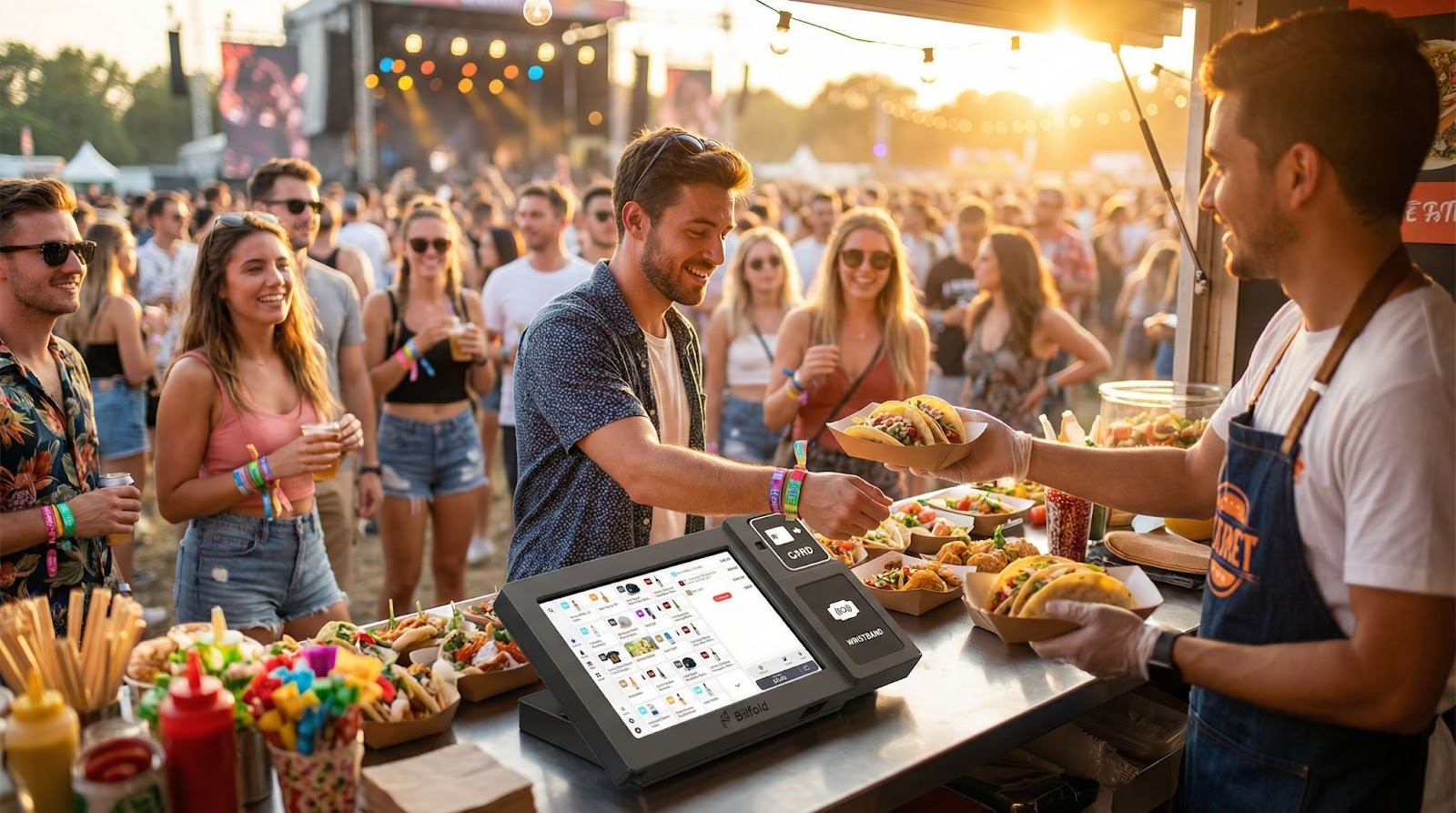
Cashless systems are becoming the default for music festival organizers who want faster transactions, higher revenue, and better attendee experiences.
- Contactless payments now account for the majority of in-person transactions globally, and festivals are following suit with RFID wristbands and tap-to-pay infrastructure.
- Festivals that adopt cashless systems consistently report increased per-attendee spending, shorter vendor lines, and stronger real-time operational control.
- Major events like Coachella, Tomorrowland, and Lollapalooza have already proven the model at scale, giving mid-size and emerging festivals a clear blueprint.
- If your festival still runs on cash in 2026, you're leaving money on the ground and frustrating a generation of attendees who expect frictionless experiences.
Ten years ago, RFID wristbands felt like a novelty reserved for the biggest names in live music. In 2026, they're table stakes. The shift toward cashless payments at music festivals has accelerated so quickly that organizers who haven't adopted some form of cashless or contactless POS are increasingly the exception. According to a Ticketmaster industry analysis, RFID wristbands, mobile wallets, and cashless payments have become standard at festivals worldwide, with further technology integration expected to enhance security, reduce fraud, and streamline transactions across the board.
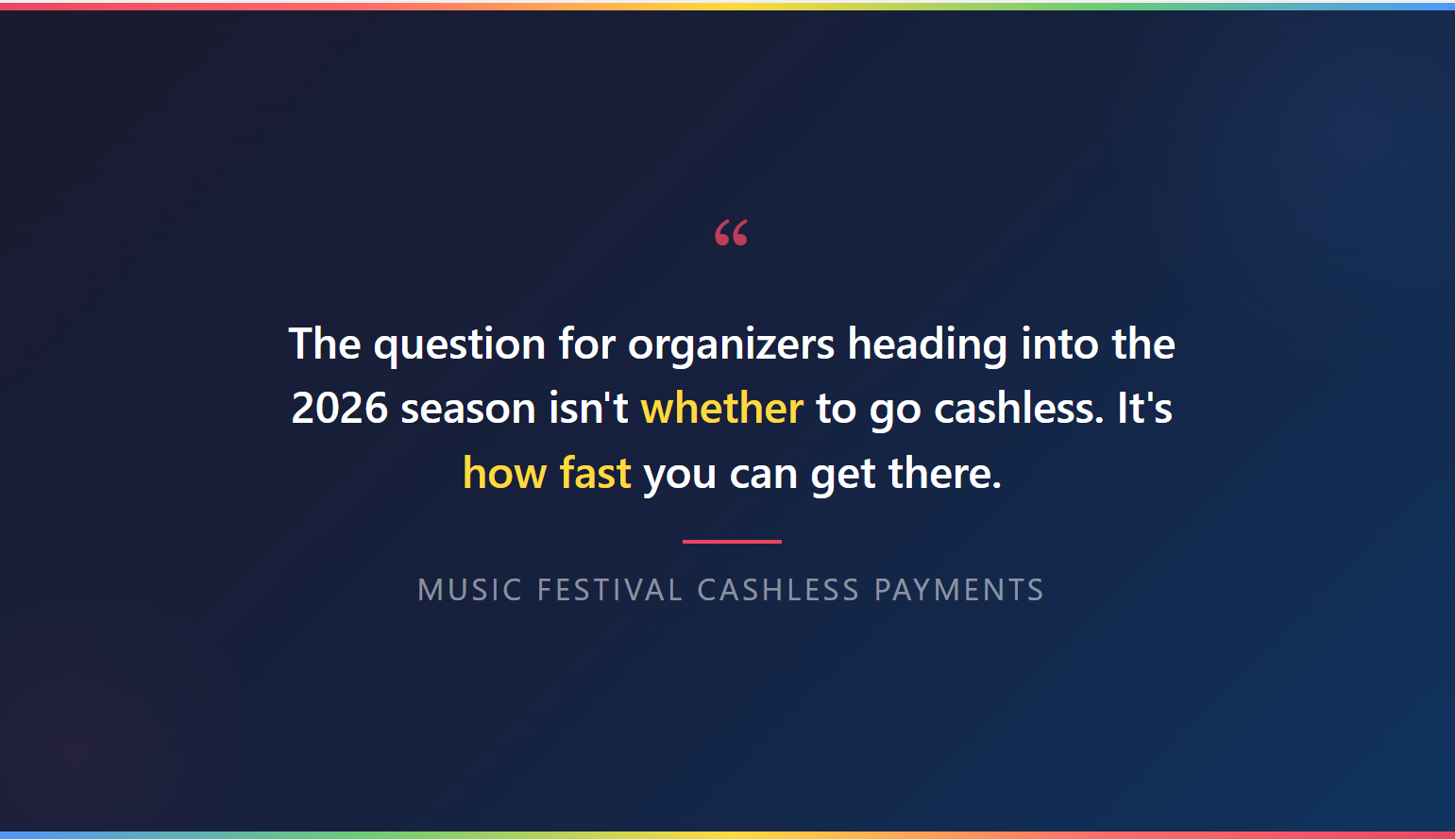
This isn't a passing trend driven by pandemic-era hygiene concerns. It's a fundamental rewiring of how festivals operate, generate revenue, and serve their audiences. The question for organizers heading into the 2026 season isn't whether to go cashless. It's how fast you can get there.
Why Are Cashless Systems Gaining Momentum at Music Festivals?
The acceleration behind cashless music festival adoption isn't coming from one direction. It's a convergence of attendee expectations, operational realities, and financial incentives that's making the old cash-and-card model look increasingly obsolete.
What's Driving Attendee Demand for Contactless Concerts?
Gen Z and Millennials make up the overwhelming majority of festival audiences, and their payment habits have permanently shifted. According to Ingenico's research on contactless adoption, Generation Z consumers are three times more likely than older demographics to use alternative payment methods like contactless and mobile wallets. They're also twice as likely to abandon a purchase entirely if their preferred payment method isn't available.
For festivalgoers, this translates to a simple expectation: tap and go. Nobody wants to stand in a 15-minute line at the beer tent because the vendor is counting change. Nobody wants to track down an ATM that charges a $5 fee in the middle of a field. The demand for contactless concerts and events is being driven by the same consumer behavior that has already transformed retail, transit, and dining. Festivals that ignore this shift risk alienating the exact demographic they're trying to attract.

How Do Cashless Payments Affect Festival Revenue?
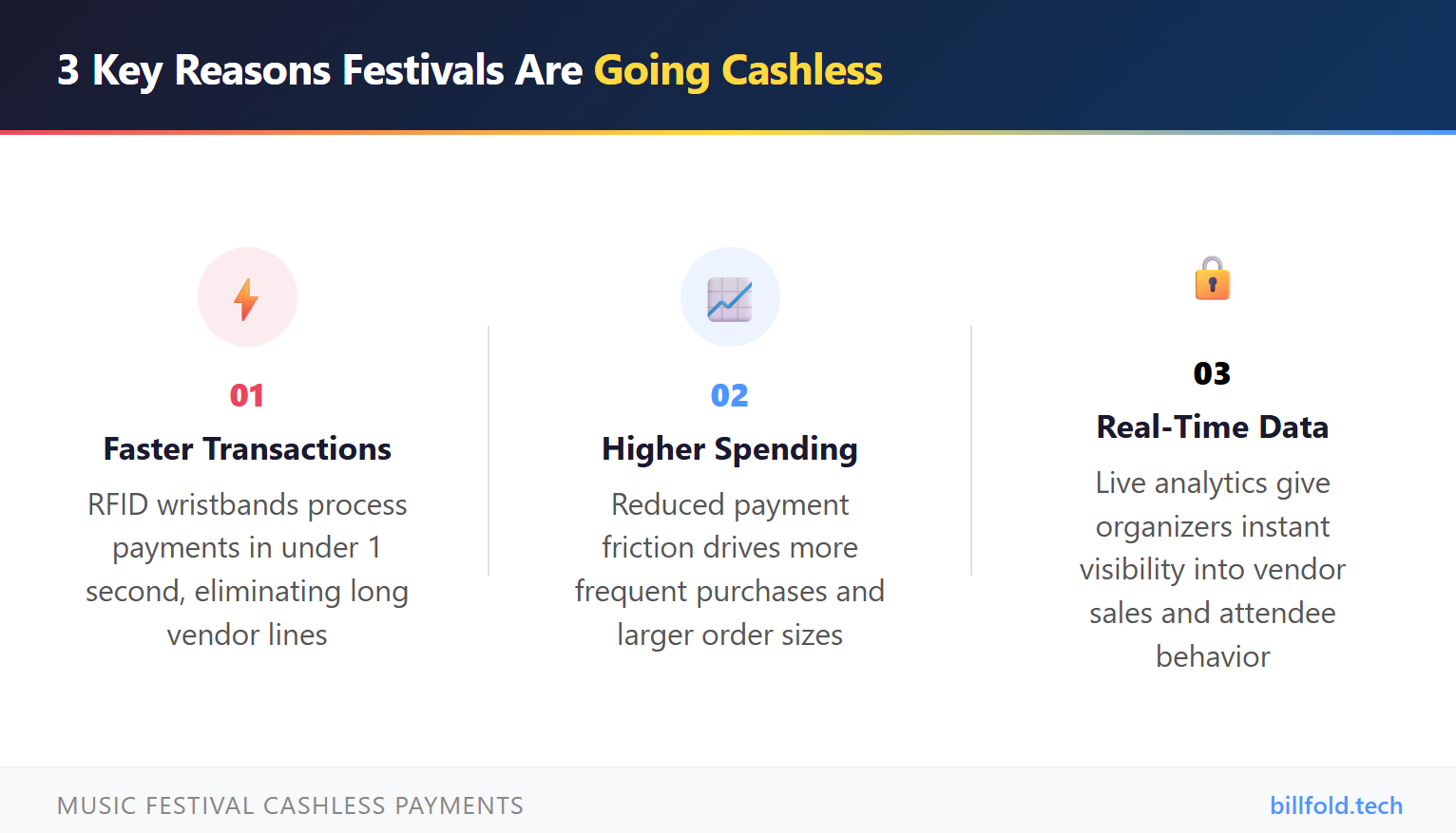
Here's where the conversation gets interesting for organizers. Cashless systems don't just speed things up. They consistently drive higher per-attendee spending. When the friction of counting bills and waiting for change disappears, people buy more frequently. They grab that second round, that extra piece of merch, that spontaneous snack between sets.
Festivals using RFID and contactless systems also gain access to real-time sales data and analytics that were impossible with cash. Organizers can see which vendors are performing, identify peak purchasing windows, adjust staffing on the fly, and make data-driven decisions about layout and vendor mix for future events. This kind of operational intelligence turns a payment system into a strategic asset.
The revenue impact extends to vendor relationships too. When vendors see faster throughput and higher sales volumes, they're more willing to participate in future events and may even agree to more favorable revenue-sharing terms.
How Do Music Festival Cashless Payment Systems Actually Work?
The technology behind cashless payments at festivals has matured significantly. Organizers now have multiple proven approaches to choose from, each with distinct advantages depending on event size, budget, and attendee demographics.
What Are the Main Technology Options?
Three primary technologies power most festival cashless systems today: RFID, NFC, and mobile wallet integration. Each handles the core task of processing payments without physical cash, but they differ meaningfully in deployment and capabilities.
RFID (Radio Frequency Identification) wristbands remain the gold standard for large-scale festivals. These wristbands contain embedded chips that communicate with readers at vendor stations, processing payments in milliseconds. The major advantage of RFID is its ability to function completely offline, which is critical for outdoor festivals where cell coverage and Wi-Fi can be unreliable. Attendees pre-load funds or link a credit card, and the wristband handles everything from there.
NFC (Near Field Communication) operates similarly but requires closer proximity between the device and reader. It's the same technology behind Apple Pay and Google Pay, making it familiar to most attendees. NFC is often integrated into RFID wristbands, creating a hybrid approach that accepts both wristband taps and smartphone payments at the same terminal.
Mobile wallet solutions rely entirely on attendees' smartphones. While this eliminates the need to produce physical wristbands, it introduces dependence on battery life and network connectivity, two things that are notoriously unreliable at large outdoor events.
Technology
Transaction Speed
Offline Capability
Setup Complexity
Best For
RFID Wristbands
Near-instant (under 1 second)
Full offline support
Moderate (wristband production, activation stations)
Large multi-day festivals
NFC (Tap-to-Pay)
Near-instant
Limited (requires network for authorization)
Low (uses existing cards/phones)
Venues and single-day events
Mobile Wallets
2-3 seconds
No offline support
Minimal
Urban festivals with strong connectivity
Many organizers are finding that a hybrid payment approach combining RFID, NFC, and QR delivers the best results, accepting wristband taps for pre-loaded funds while also processing contactless cards and mobile payments at the same music festival POS terminal.
Which Major Festivals Have Already Gone Cashless?
The list of festivals running cashless operations reads like a who's who of the global live music industry. These aren't pilot programs or experiments anymore. They're proven, scaled implementations that have reshaped attendee expectations.
- Coachella was one of the earliest large-scale adopters of RFID wristbands in the United States, using the technology for both access control and cashless payments across hundreds of vendor locations. The system handles hundreds of thousands of transactions over two consecutive weekends with one-tap simplicity.
- Tomorrowland in Belgium has integrated NFC technology deeply into its DreamVille camping experience, enabling seamless transactions for food, drinks, and activities. The festival has credited its cashless infrastructure with measurable increases in on-site spending.
- Lollapalooza launched "Lolla Cashless" as one of the first RFID-enabled payment initiatives from a major U.S. music festival, allowing festivalgoers to link credit cards to their wristbands and make purchases with a tap and PIN. The system was designed to work offline given the connectivity challenges of hosting hundreds of thousands of people in Grant Park.
- Bonnaroo, Electric Daisy Carnival, and Splendour in the Grass have all implemented RFID at concerts and festival grounds, each reporting faster vendor throughput and reduced cash-handling headaches.
- Lightning in a Bottle and Elements Music & Arts Festival represent the growing wave of mid-tier festivals adopting cashless infrastructure, proving the technology isn't reserved for mega-events with six-figure attendance.
The pattern is clear. Festivals that go cashless tend to stay cashless, and their attendees come to expect it at every subsequent event.
What Should Organizers Consider Before Going Cashless at a Music Festival?
Adopting a cashless music festival system isn't as simple as ordering RFID wristbands and plugging in readers. Successful implementation requires planning around infrastructure challenges, attendee communication, and operational contingencies.
How Do You Handle Connectivity Issues?
This is the single biggest operational concern for any outdoor festival considering cashless payments. Cell towers get overwhelmed. Temporary Wi-Fi networks drop. If your music festival POS system requires a constant internet connection to process every transaction, you're setting yourself up for disaster during peak hours.
The solution is choosing infrastructure built specifically for live events, with robust offline processing capabilities. Systems that store transactions locally and sync when connectivity returns ensure that your bars and food vendors never have to turn away a customer because of a network hiccup. The best festival POS systems are engineered for exactly this scenario, maintaining full functionality regardless of network conditions.
What About Attendees Who Prefer Cash?
Every festival audience includes people who are uncomfortable with or unable to use cashless systems. A thoughtful implementation accounts for these attendees rather than ignoring them.
The most common approach is deploying top-up stations where cash-carrying attendees can load physical currency onto an RFID wristband or prepaid card. This converts their cash into the festival's digital ecosystem while still giving them full access to every vendor. Clear signage, adequate staffing at top-up points, and pre-event communication about how the system works all reduce friction for first-time cashless users.
Built for Peak-Hour Traffic
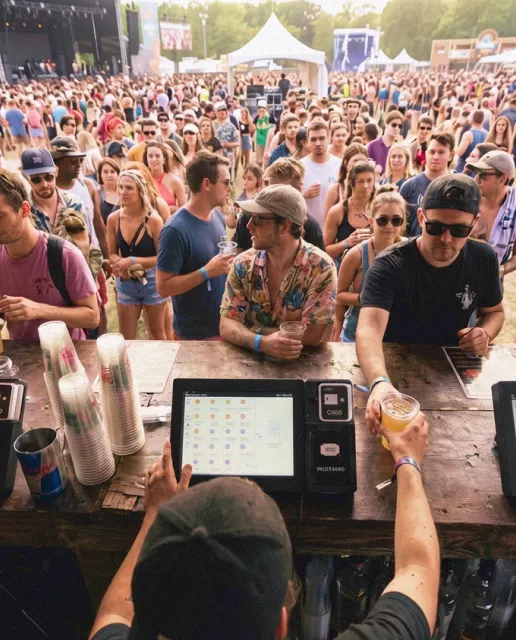
Built for high-volume festivals where speed, offline capability, and operational visibility matter most.
Explore Festival POSWhat Does the Future Hold for Contactless Concerts and Festival Payments?
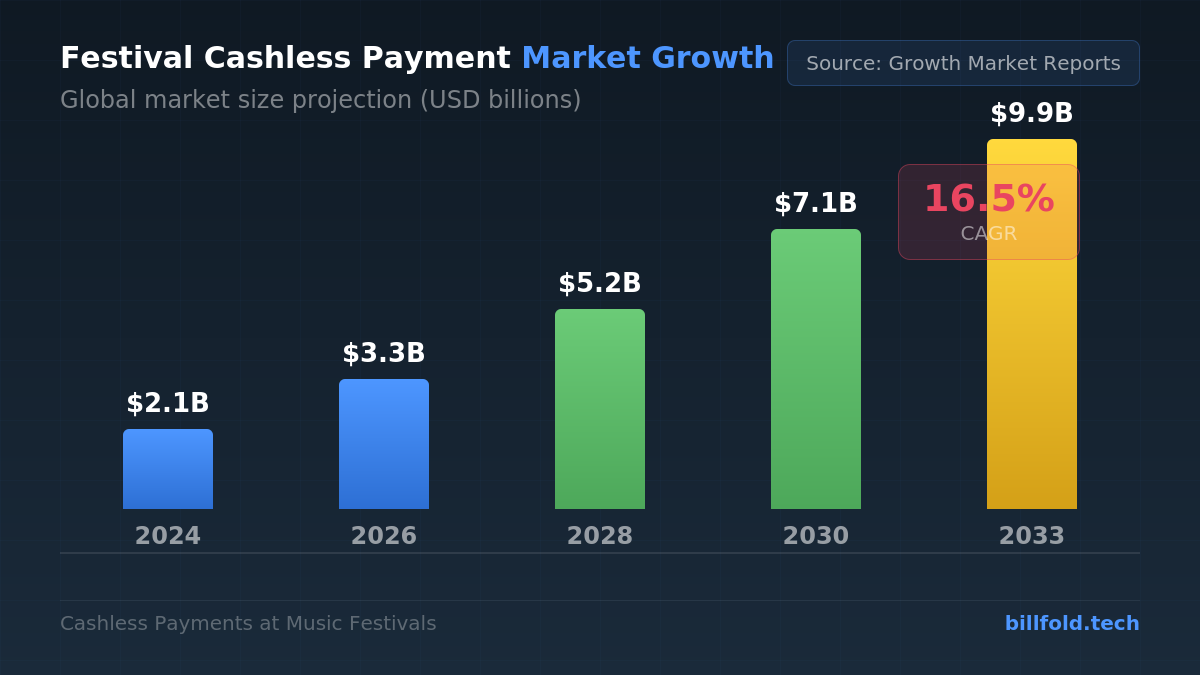
The music festival cashless landscape is evolving rapidly. According to Growth Market Reports, the global festival cashless payment platforms market reached an estimated $2.12 billion in 2024 and is projected to grow to $9.89 billion by 2033, driven by increasing demand for efficient and secure payment solutions at large-scale events.
Several developments are shaping where this technology goes next. Biometric authentication is already being tested at select events. AI-powered analytics are giving organizers predictive capabilities, forecasting demand patterns before they happen. And the integration between payment systems and broader event technology stacks is creating unified ecosystems where a single wristband handles everything from gate entry to the last drink of the night.
Feature
Traditional Cash/Card
Modern Cashless System
Average transaction time
15-30 seconds
Under 3 seconds
Real-time sales visibility
None
Full dashboard access
Offline capability
Cash only
Full RFID support
Per-attendee spending insight
Impossible to track
Granular analytics
Theft and counterfeit risk
High
Virtually eliminated
Vendor settlement speed
Days to weeks
Next-day or faster
RFID at concerts and festivals will continue expanding. Cashless operations will become the assumed default rather than a feature worth advertising. And organizers who invest in this infrastructure now will have a significant competitive advantage as attendee expectations continue rising.
FAQ
How much does it cost to implement a cashless payment system at a music festival? Costs vary based on event size and technology choice. RFID wristband systems typically include per-wristband costs, hardware for vendor stations, software licensing, and on-site support. Many providers offer tiered pricing that scales with attendance, and revenue increases from cashless adoption often offset implementation costs within the first event.
Can cashless systems work at remote outdoor festival locations without reliable internet? Yes, this is one of the primary advantages of RFID-based systems. Purpose-built festival payment platforms process and store transactions locally on the device, then sync data when connectivity is restored. This offline capability ensures uninterrupted operations even in remote locations.
What happens to money left on a wristband after the festival ends? Most cashless providers offer a refund process for unused balances. Attendees typically request refunds through an online portal within a specified window after the event. Organizers should communicate refund policies clearly before and during the festival to build trust with first-time cashless users.
Do cashless festivals still need to accommodate cash-paying attendees? While fully cashless operations are increasingly common, most festivals provide top-up stations where attendees can convert cash into digital credit on their wristband or card. This keeps the festival ecosystem cashless at the point of sale while remaining accessible to all attendees.
Ready to Make Your Festival Cashless?
The move toward cashless payments at music festivals is accelerating because it works. For organizers, it means more revenue, better data, and smoother operations. For attendees, it means less time in line and more time doing what they came for. For vendors, it means faster service and higher volume. Billfold provides the purpose-built cashless POS technology that festivals and live events need to make this transition seamlessly. Get in touch with the Billfold team to see how your next event can go cashless with confidence.
