
How RFID Wristbands for Events Drive Food Festival Spending
RFID wristbands eliminate payment friction and unlock higher guest spending at food festivals.
- Transactions complete in under two seconds, enabling more purchases per attendee
- The psychological shift from physical cash to tap payments increases impulse buying
- Real-time data capture reveals vendor performance and guest behavior patterns
- If your food festival still relies on cash-heavy operations, you're leaving significant revenue on the table.
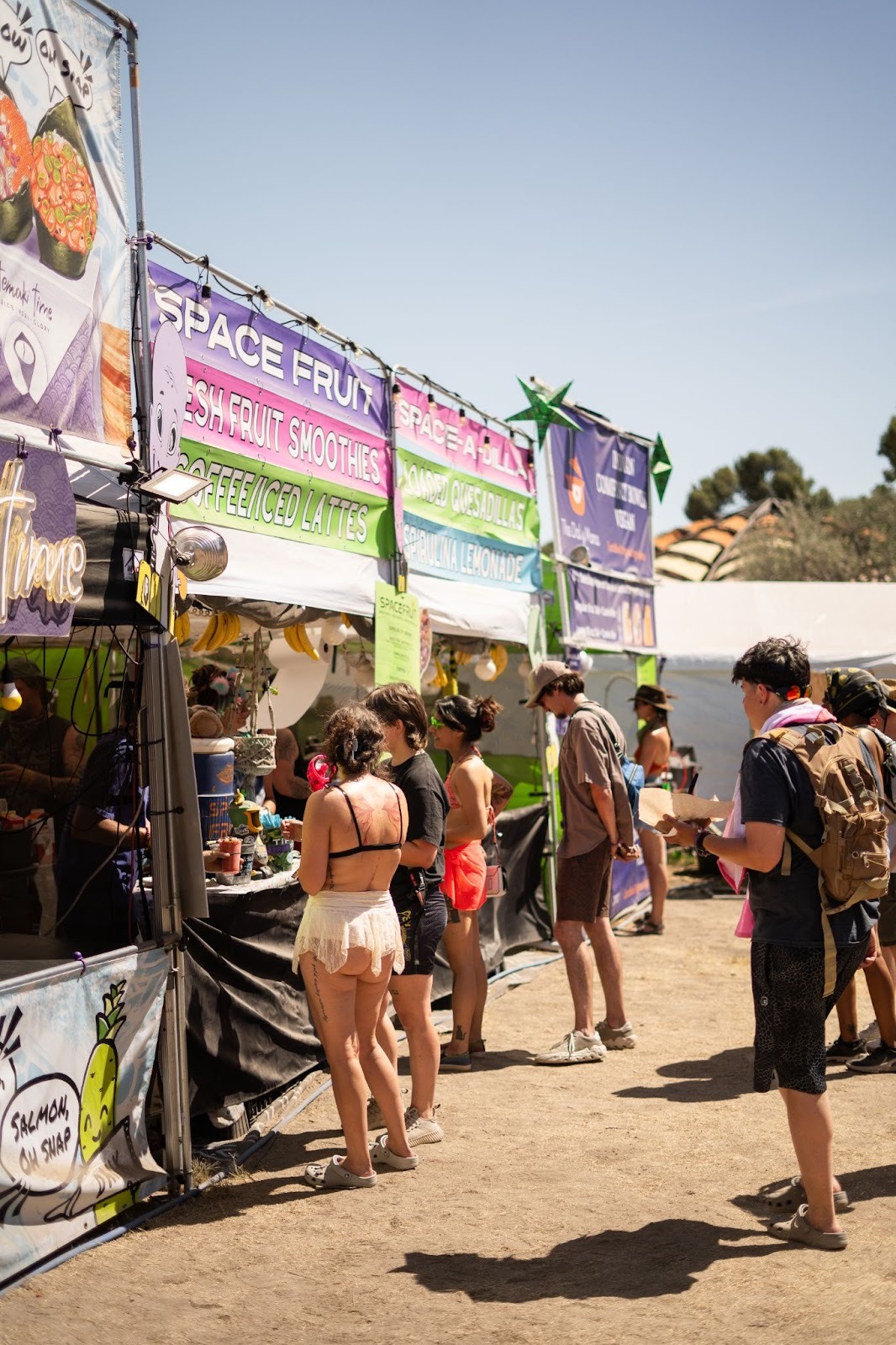
Food festivals thrive on spontaneous purchases. A guest catches the scent of fresh tacos, spots an artisan ice cream stand, then notices a craft cocktail bar on their way to the next stage. Each of these moments represents revenue potential, but only if the payment experience keeps pace with their appetite. With the global RFID market valued at $15.49 billion in 2024 and projected to reach $37.71 billion by 2032, food festival organizers are discovering that cashless payment technology transforms how guests interact with vendors throughout the event.
RFID wristbands for events have become the preferred payment solution for festivals prioritizing both attendee experience and operational revenue. When guests preload funds onto their wristbands before arrival or during the event, they're psychologically committed to spending. The friction that once existed between craving and purchase disappears entirely.
Why Do Food Festivals Choose RFID Wristbands for Events?
Food festivals present unique payment challenges that traditional methods struggle to address. Vendors operate from temporary setups across sprawling grounds, Wi-Fi connectivity varies dramatically between locations, and guests expect the same seamless experience they'd find at any modern retail environment. RFID wristbands for events solve these challenges while creating new opportunities for revenue growth.
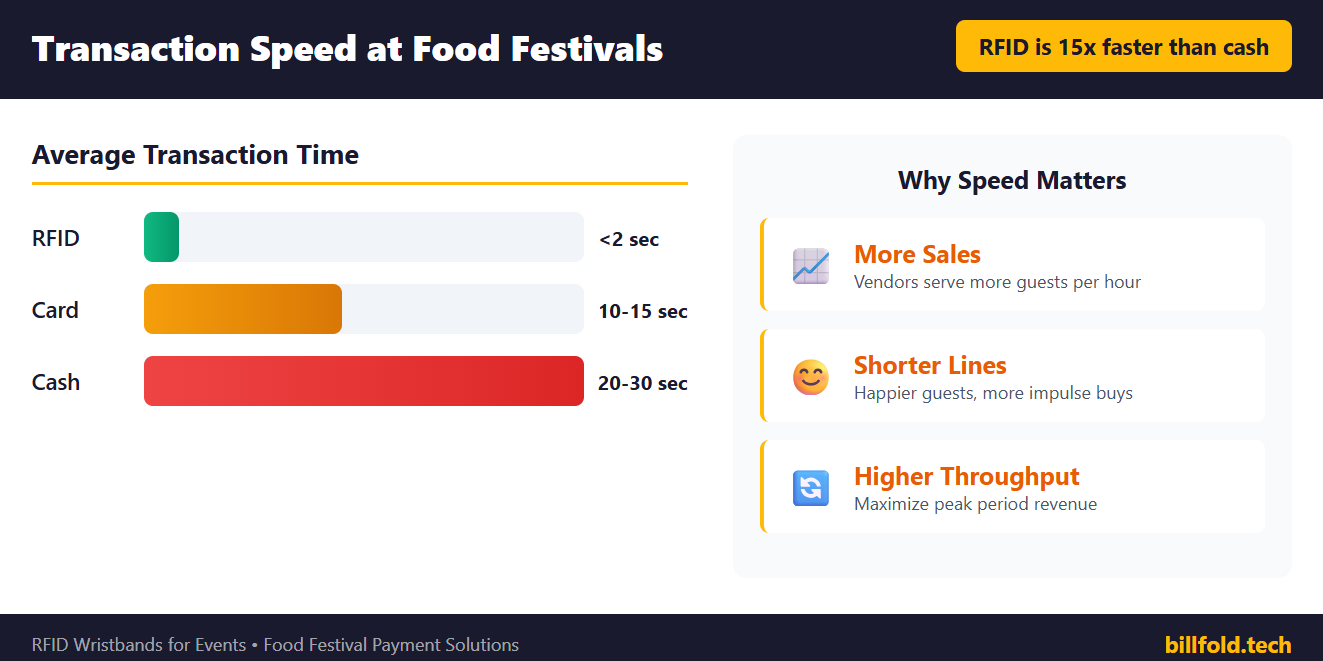
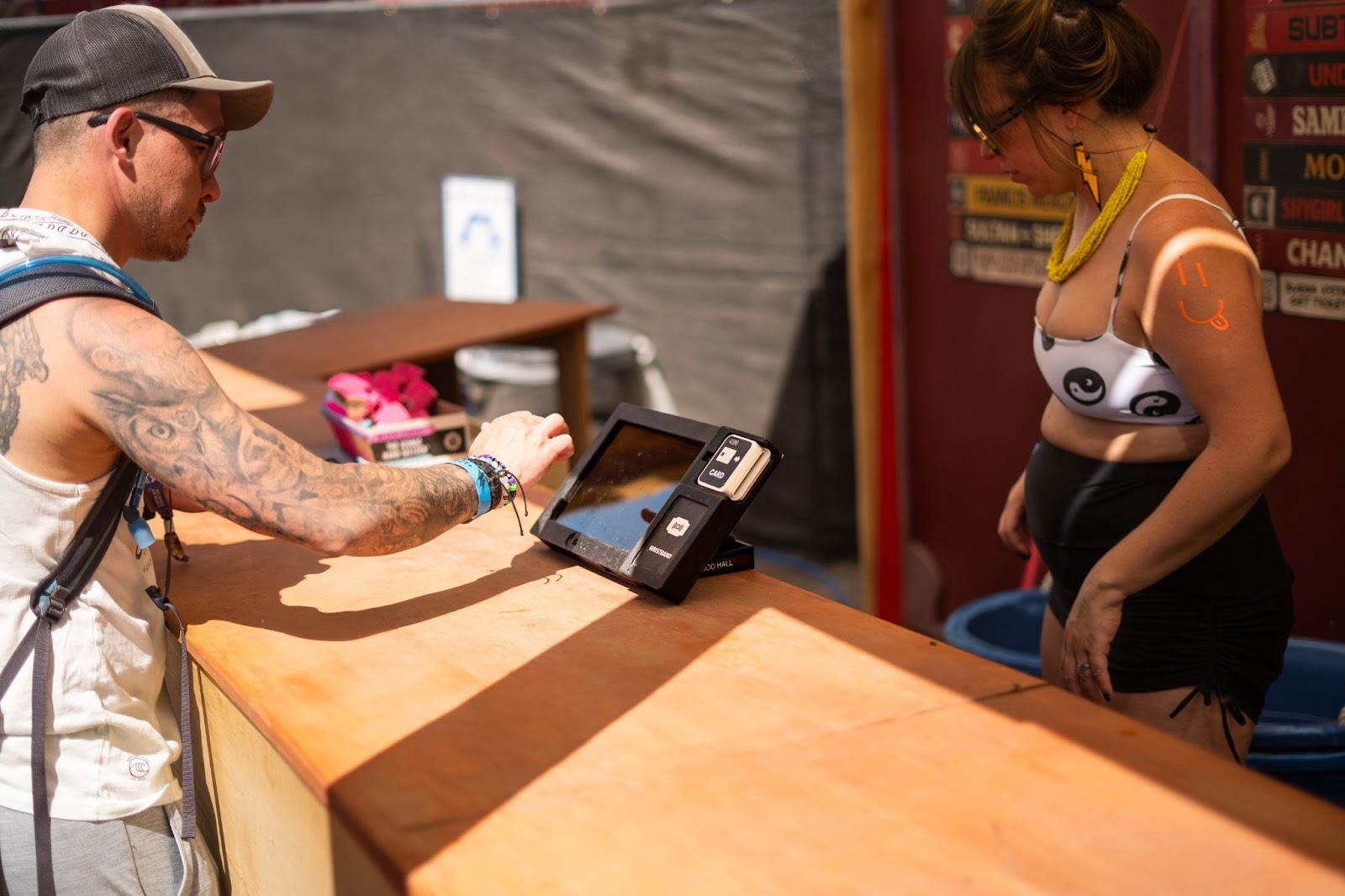
The technology works simply: each wristband contains a small chip that stores payment credentials and account information. When a guest taps their wristband against a reader, the transaction completes in under two seconds. This speed matters enormously at food festivals where vendors face concentrated rushes during meal times and between performances.

How Does Transaction Speed Create Spending Opportunities?
Consider the math. A traditional cash transaction at a busy food booth takes approximately 20-30 seconds when accounting for order taking, cash handling, and change counting. Card transactions average 10-15 seconds. RFID transactions consistently complete in under two seconds. Over a six-hour festival day with continuous traffic, those seconds compound into meaningful differences in throughput and revenue capacity.
Festivals implementing RFID for festivals report that vendors serve substantially more customers per hour. This increased capacity translates directly to revenue, particularly during peak periods when traditional payment methods would create bottlenecks that discourage purchases.
What Psychology Drives Frictionless Spending?
RFID cashless events benefit from a well-documented psychological phenomenon. When guests pay with preloaded wristbands rather than physical cash, the emotional weight of each purchase diminishes. This trend aligns with broader consumer behavior shifts, as research indicates approximately 87% of US point-of-sale transactions now occur without cash.
At food festivals, this effect amplifies. Guests who might hesitate to break a twenty-dollar bill for a five-dollar snack will tap their wristband without that same mental calculation. The result is more frequent purchases and higher average transaction values across the event.
What Are the Top Benefits of RFID Wristbands for Events?
Festival organizers implementing RFID technology discover benefits extending far beyond faster transactions. The comprehensive advantages reshape operations and create lasting value for future events.
Increased Average Spend Per Guest: Preloaded wristband systems encourage guests to spend their entire balance throughout the event. The friction of obtaining refunds motivates complete spending, while the convenience of tap payments removes barriers to impulse purchases. Festivals routinely see meaningful increases in per-capita revenue after implementing RFID wristbands for events.
Dramatically Reduced Queue Times: Long lines at food vendors frustrate guests and cost organizers money. Every minute a guest spends waiting represents time not spent at other vendors or enjoying performances. RFID for festivals slashes these wait times, keeping guests moving and spending throughout the venue.
Eliminated Cash Handling Risks: Food festivals traditionally face significant cash management challenges. Vendors must secure substantial cash reserves, reconcile at day's end, and protect against theft or loss. RFID cashless events eliminate these concerns entirely. All transactions settle electronically, with real-time visibility into revenue across every vendor location.
Streamlined Vendor Operations: Food booth staff focus on what they do best when they don't have to handle cash. Orders get completed faster, accuracy improves, and vendors report higher satisfaction with RFID payment technology compared to traditional systems.
Weather-Resistant Reliability: Outdoor food festivals contend with unpredictable conditions. RFID wristbands continue functioning regardless of rain, humidity, or temperature extremes that might compromise mobile phones or paper tickets.
How Does RFID Accelerate Transaction Times at Food Vendors?
The technical architecture behind RFID enables its speed advantage. Unlike traditional payment card transactions that require network communication with banks and payment processors, RFID wristband systems can validate transactions locally. This approach proves particularly valuable at food festivals where network connectivity challenges often arise.
When a guest taps their wristband, the reader confirms sufficient balance and processes the deduction within the local system. Synchronization with central servers happens in the background without affecting transaction speed. For food vendors handling high-volume rushes, this near-instantaneous processing means the difference between manageable lines and frustrated crowds.
Why Does Offline Capability Protect Revenue?
Festival venues often struggle with cellular congestion and Wi-Fi dead zones. RFID systems designed for events include offline processing capabilities that maintain transaction speed even when network connectivity drops entirely. Vendors continue serving guests, and all transactions reconcile automatically once connectivity returns.
This reliability distinguishes comprehensive RFID wristband solutions from mobile payment alternatives that depend on consistent network access. Food festival organizers appreciate the confidence of knowing vendor operations continue regardless of technical challenges.
What Data Insights Do Food Festival Organizers Gain?
Beyond transactional benefits, RFID wristbands for events generate invaluable data that informs future planning and real-time operational decisions. Every tap creates a record that contributes to comprehensive analytics unavailable through cash-based systems.
Festival organizers gain visibility into which food vendors perform strongest at different times of day. They discover traffic patterns revealing how guests move between stages and vendor areas. They identify menu items driving the highest revenue and spot underperforming locations that might benefit from repositioning.

How Does Real-Time Data Enable Better Decision Making?
During the festival itself, RFID data enables responsive management. If a particular food area shows unexpectedly high traffic, organizers can communicate with vendors about inventory or adjust staffing. When sales lag at certain locations, promotions or wayfinding adjustments can redirect guest flow.
This operational intelligence extends to improving the overall guest experience beyond payments. Understanding how long guests wait at different vendors, which vendor combinations guests frequently visit in sequence, and where congestion develops helps organizers optimize layouts and schedules for subsequent events.
How Does Post-Event Analysis Power Future Growth?
After the festival concludes, comprehensive transaction data supports sophisticated analysis. Organizers can calculate true per-capita spending, understand vendor revenue distribution, and identify opportunities for improvement. This data-driven approach to planning helps festivals grow revenue year over year while enhancing attendee satisfaction.
Festival RFID benefits extend to vendors as well. Individual booth operators receive detailed performance reports showing their transaction volumes, peak periods, and popular items. This transparency builds stronger vendor relationships and helps food partners optimize their own operations.
How Do Major Food Festivals Implement RFID Successfully?
Successful RFID deployment at food festivals follows established patterns that maximize adoption and minimize friction. Pre-event communication establishes expectations and encourages guests to register and load funds before arrival. On-site registration stations provide alternatives for those who prefer in-person setup.
Strategic placement of top-up stations throughout the venue ensures guests can add funds without traveling far from their current location. Clear signage at every food vendor confirms RFID acceptance and explains the tap process for first-time users. Staff training emphasizes quick troubleshooting and positive guest interactions.
The festivals achieving the strongest results treat RFID cashless events as comprehensive experiences rather than simple payment substitutions. They communicate the benefits of faster service and shorter lines, turning the technology into a selling point that enhances the overall festival value proposition.
What Should Food Festival Organizers Consider When Making the Switch?
Transitioning to RFID requires thoughtful planning but delivers returns that justify the investment. Organizers should evaluate their vendor mix, guest demographics, and operational goals when selecting a technology partner. Integration capabilities with existing ticketing and access control systems streamline implementation and create unified guest experiences.
The commitment to cashless operations need not be absolute from day one. Many festivals begin with hybrid approaches where RFID coexists with traditional payment options, then transition to fully cashless as guest adoption increases. This phased approach reduces risk while building organizational expertise with the technology.
Frequently Asked Questions
How much does implementing RFID wristbands for events typically cost food festivals? Implementation costs vary based on festival size, vendor count, and equipment requirements. Most festivals find that increased revenue from higher per-guest spending offsets technology costs within the first event, with subsequent years delivering pure profit improvement from the investment.
Can guests get refunds for unspent wristband balances after the festival? Refund policies depend on the specific implementation. Most festivals offer post-event refund windows where guests can request returns of unspent balances, though encouraging full spending during the event maximizes both guest experience and festival revenue.
What happens if a guest loses their RFID wristband during the food festival? Modern RFID systems allow staff to quickly deactivate lost wristbands and transfer remaining balances to replacement bands. This security feature protects guest funds while maintaining the convenience of cashless payments throughout the event.
Do RFID wristbands work with dietary restriction or allergy tracking at food vendors? Some advanced implementations allow guests to store dietary information on their wristband profiles, enabling vendors to see relevant alerts when processing transactions. This capability enhances food safety while streamlining the ordering process for guests with specific requirements.
Elevate Your Food Festival Revenue
RFID wristbands for events represent more than a payment technology upgrade. They embody a fundamental shift in how food festivals operate, generate revenue, and serve their guests. The combination of faster transactions, increased spending, eliminated cash handling, and rich data insights creates compelling value for organizers willing to embrace the change.
For festival organizers ready to transform their food vendor operations and unlock new revenue potential, Billfold delivers proven RFID solutions built specifically for live events. Connect with our team to discover how cashless technology can elevate your next food festival.
